
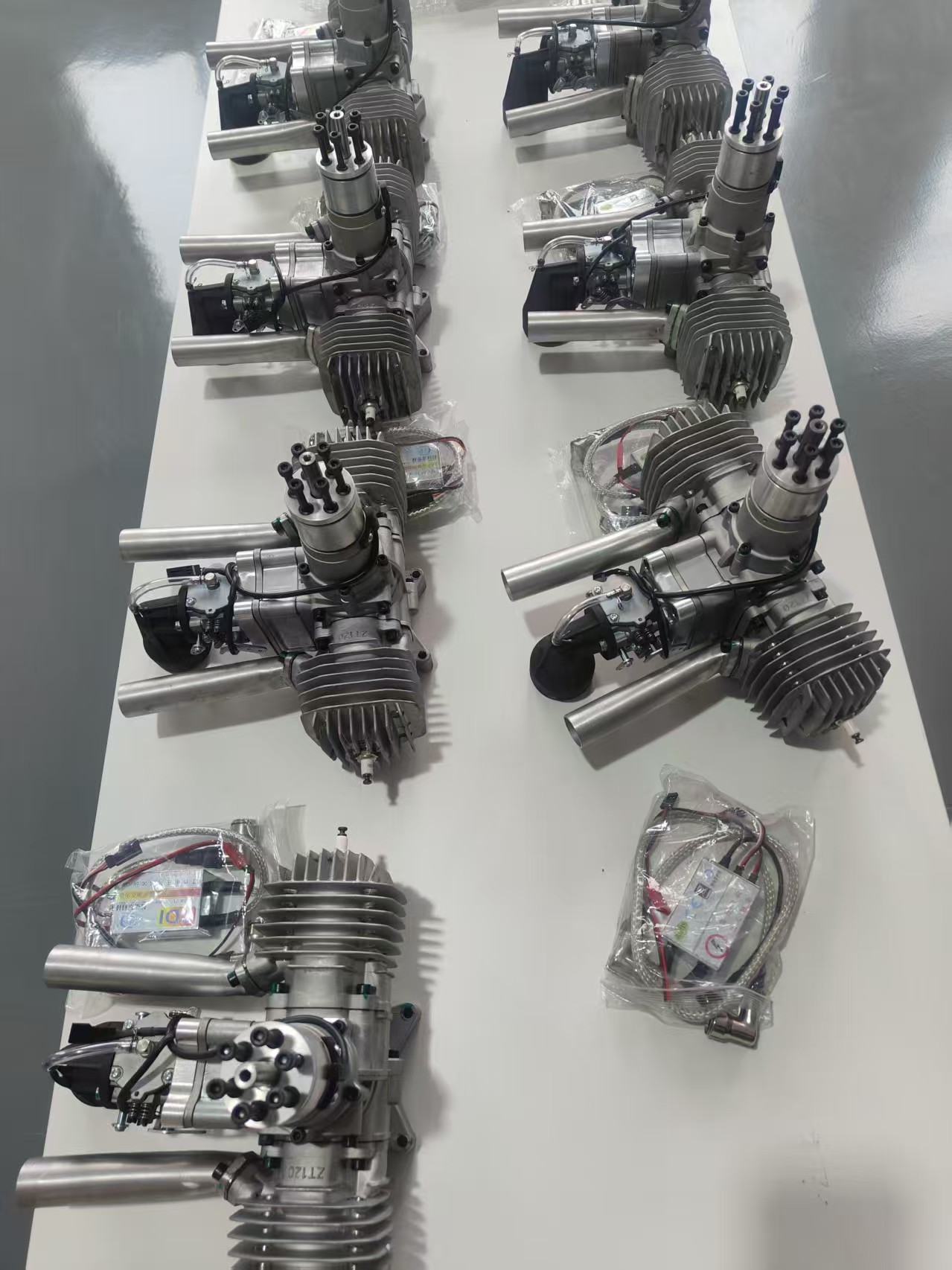
Operating an Unmanned Aerial Vehicle (UAV) in diverse geographic locations presents significant engineering challenges. A drone that performs flawlessly at sea level on a warm day may struggle to stay airborne in the thin, freezing air of a mountain range. For operators relying on gas-powered propulsion, understanding UAV engine altitude performance and the impact of environmental extremes is critical. Fortunately, modern advancements, specifically the EFI drone engine, have revolutionized how drones handle these challenges through automatic drone engine temperature compensation and altitude adjustment.
The Physics of High-Altitude and Extreme Temperature Flights
Internal combustion engines rely on a precise mixture of oxygen and fuel to generate power. As altitude increases, atmospheric pressure drops, and the air becomes less dense (thinner). This means there is less oxygen available for combustion in a given volume of air. Cold air is denser than warm air, meaning it contains more oxygen. Conversely, hot air is less dense. If an engine's fuel delivery system cannot adapt to these changing air densities, the air-to-fuel ratio becomes imbalanced, leading to significant performance degradation.
The Limitations of Carbureted Engines at Altitude
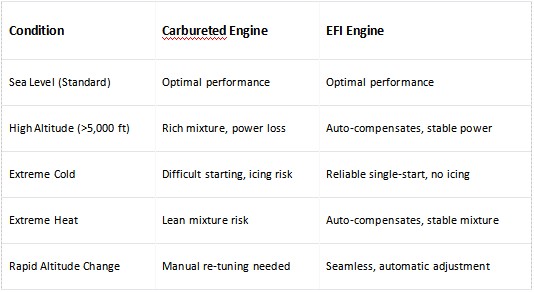
Traditional carbureted engines use fixed mechanical jets to mix fuel and air. If a carbureted drone takes off at sea level and climbs to 10,000 feet, the air becomes thinner, but the carburetor continues to deliver the same amount of fuel. This results in a "rich" mixture (too much fuel, not enough oxygen). A rich mixture causes the engine to lose significant power, run roughly, foul its spark plugs, and consume fuel inefficiently. To fix this, a mechanic must physically land the drone and manually re-tune the carburetor for the new altitude—a highly impractical requirement for long-range missions.
The EFI Solution: Automatic Adaptation
An EFI drone engine completely eliminates the manual tuning problem. An EFI system utilizes an Engine Control Unit (ECU) paired with sensors that constantly monitor barometric pressure (altitude) and intake air temperature. As the drone flies higher into thinner air, or as the temperature shifts, the ECU instantly detects the change in air density. It then automatically calculates the exact milliseconds the fuel injectors should stay open to deliver the perfect amount of fuel. This real-time, automatic altitude and drone engine temperature compensation ensures the engine maintains the optimal air-to-fuel ratio at all times.
Environmental Performance Comparison
ZT EFI Engines: Built for Extreme Conditions
Shandong Zhongtian Technology (ZT) engineers its EFI engines specifically to conquer harsh environments. Engines like the ZT 170cc and ZT 730cc feature advanced ECU systems capable of automatically adjusting ignition timing, fuel injection volume, and idle control based on real-time engine temperature and altitude data. This ensures that whether a ZT-powered UAV is mapping a hot desert valley or surveying a freezing, high-altitude mountain pass, it delivers consistent, reliable, and fuel-efficient UAV engine altitude performance.
Conclusion
Environmental factors can cripple a drone mission if the propulsion system cannot adapt. By utilizing an EFI drone engine, operators guarantee that their aircraft can automatically perform critical altitude and drone engine temperature compensation. This technology ensures peak performance, maximum fuel efficiency, and mission success, regardless of where the drone is deployed.
RECENT NEWS
Leave A Message