
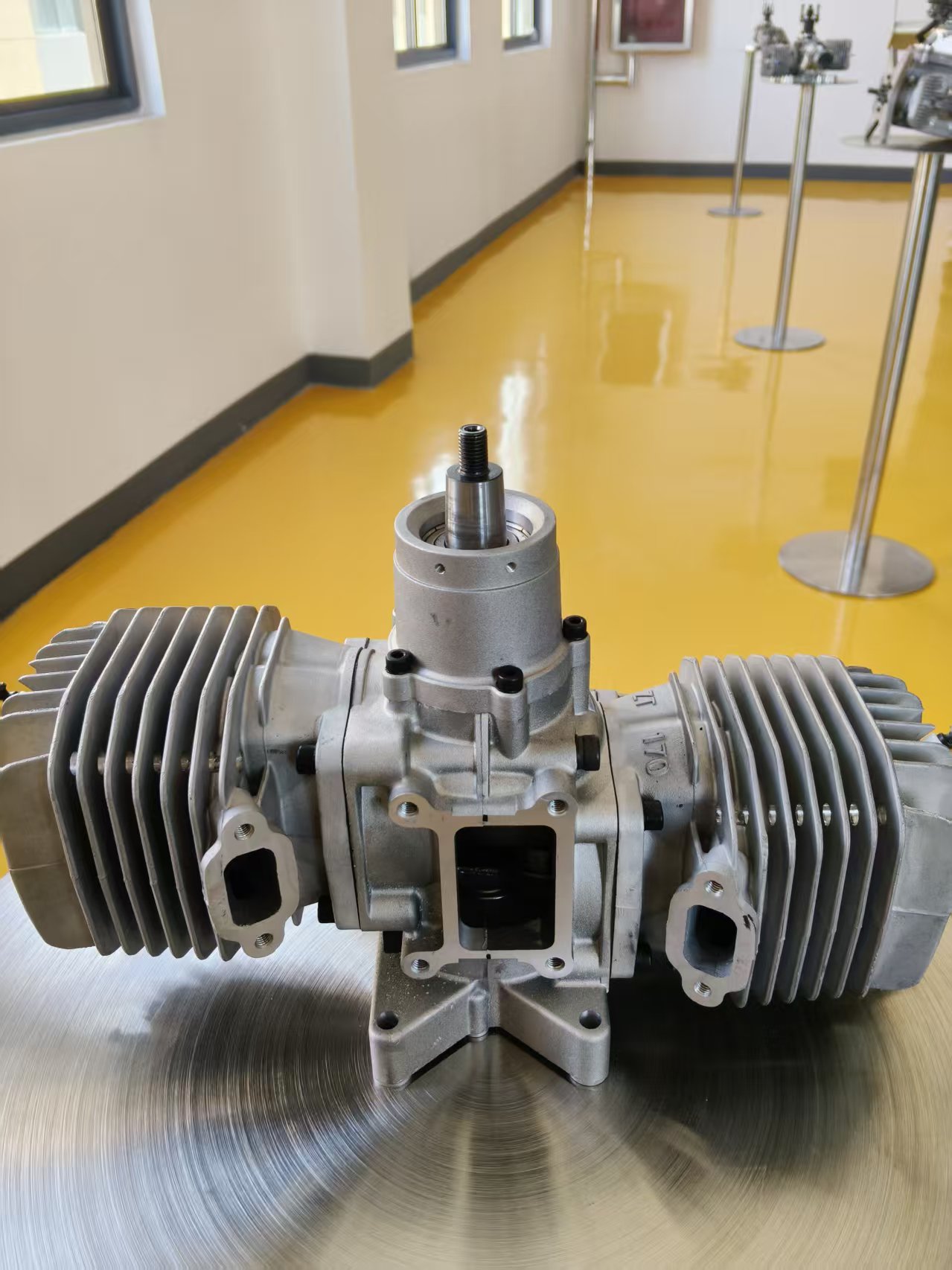
When designing or upgrading a gas-powered Unmanned Aerial Vehicle (UAV), one of the fundamental engineering choices is selecting the engine configuration. Specifically, drone builders must decide between a single-cylinder or a twin-cylinder UAV engine. Both configurations utilize a UAV gas engine to burn fuel and generate thrust, but their mechanical differences profoundly impact the drone's performance, vibration levels, and overall reliability. Understanding this comparison is essential for optimizing your aerial platform.
Single-Cylinder Engines: Best Use Cases
As the name implies, a single-cylinder engine features one piston moving within one cylinder. The primary benefits of a single-cylinder engine are simplicity, compact size, and low weight. With fewer moving parts, they are generally easier to maintain and cheaper to manufacture. For smaller gas-powered drones where minimizing the physical footprint of the engine is the absolute highest priority, a single-cylinder setup can be an appropriate choice.
However, the major drawback of a single-cylinder engine is vibration. Because the explosive force of combustion and the heavy movement of the piston occur in only one direction without a counterbalancing force, these engines shake violently. In a UAV, severe vibration can loosen bolts, damage fragile airframes, and completely disrupt sensitive optical payloads like cameras and LiDAR sensors.
The Twin-Cylinder Advantage: Smooth Power
A twin-cylinder UAV engine, particularly in a horizontally opposed (boxer) configuration, solves the critical issues inherent in single-cylinder designs. In a boxer twin, two pistons move in and out simultaneously on opposite sides of the crankshaft.
Drone Engine Vibration Reduction
The most significant advantage of the twin-cylinder boxer design is natural balance. Because the pistons move in opposite directions at the exact same time, the physical forces they generate cancel each other out. This results in massive drone engine vibration reduction. A smooth-running engine dramatically increases the lifespan of the drone's airframe and avionics, and allows for the capture of crystal-clear aerial photography and precise mapping data.
Performance and Reliability Boost
Twin-cylinder engines also distribute the workload. With two smaller combustions happening per revolution rather than one massive explosion, the power delivery is smoother and more consistent. Furthermore, twin-cylinder engines generally run cooler because the heat of combustion is spread across two cylinders with more surface area for air cooling, reducing engine wear and increasing long-term reliability.
Head-to-Head Comparison
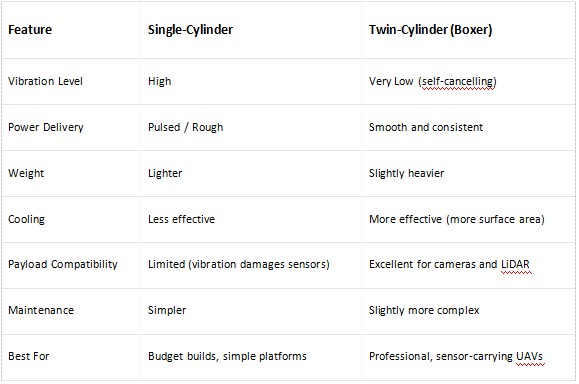
Deep Dive: The ZT 120cc Twin-Cylinder Engine
Shandong Zhongtian Technology (ZT) perfectly illustrates the benefits of this configuration with the ZT 120cc UAV Engine. Crafted specifically to provide an unparalleled flying experience, this twin-cylinder gasoline engine utilizes opposed cylinders to drastically reduce vibration and engine wear.
By integrating high-performance mufflers, custom standoffs, and advanced electronic ignition, the ZT 120cc delivers exceptional punch and reliability at a remarkably low weight. It is the ideal choice for aviation professionals who require the endurance of gas power without the destructive vibrations of a single-cylinder engine.
Conclusion
While single-cylinder engines have their place in budget or highly space-constrained builds, the twin-cylinder UAV engine is the superior choice for professional, commercial, and heavy-lift drones. The inherent drone engine vibration reduction, combined with smoother power delivery and better cooling, makes the twin-cylinder configuration a vital component for any serious UAV gas engine application.
RECENT NEWS
Leave A Message